Understanding Canon 1136
Pillar Two — Catholic Marriage & Religious Obligation
Children need adults who accept responsibility for their care and formation. Canon 1136 identifies parents’ grave duty and primary right to educate their children across physical, social, cultural, moral, and religious life. The scope is broad: parenthood involves the formation of a person, not simply the selection of a school.[1]
Responsibility begins with the child
The Catechism requires parents to respect their children as persons and recognizes their primary educational responsibility.[2] Authority serves that responsibility.
For TCMP, this provides a child-centered starting point. A choice about schooling, discipline, religious practice, or household routine should consider what the child needs and what responsibilities the parents have undertaken. The child should not become a means of settling an adult disagreement.
Education happens in ordinary life
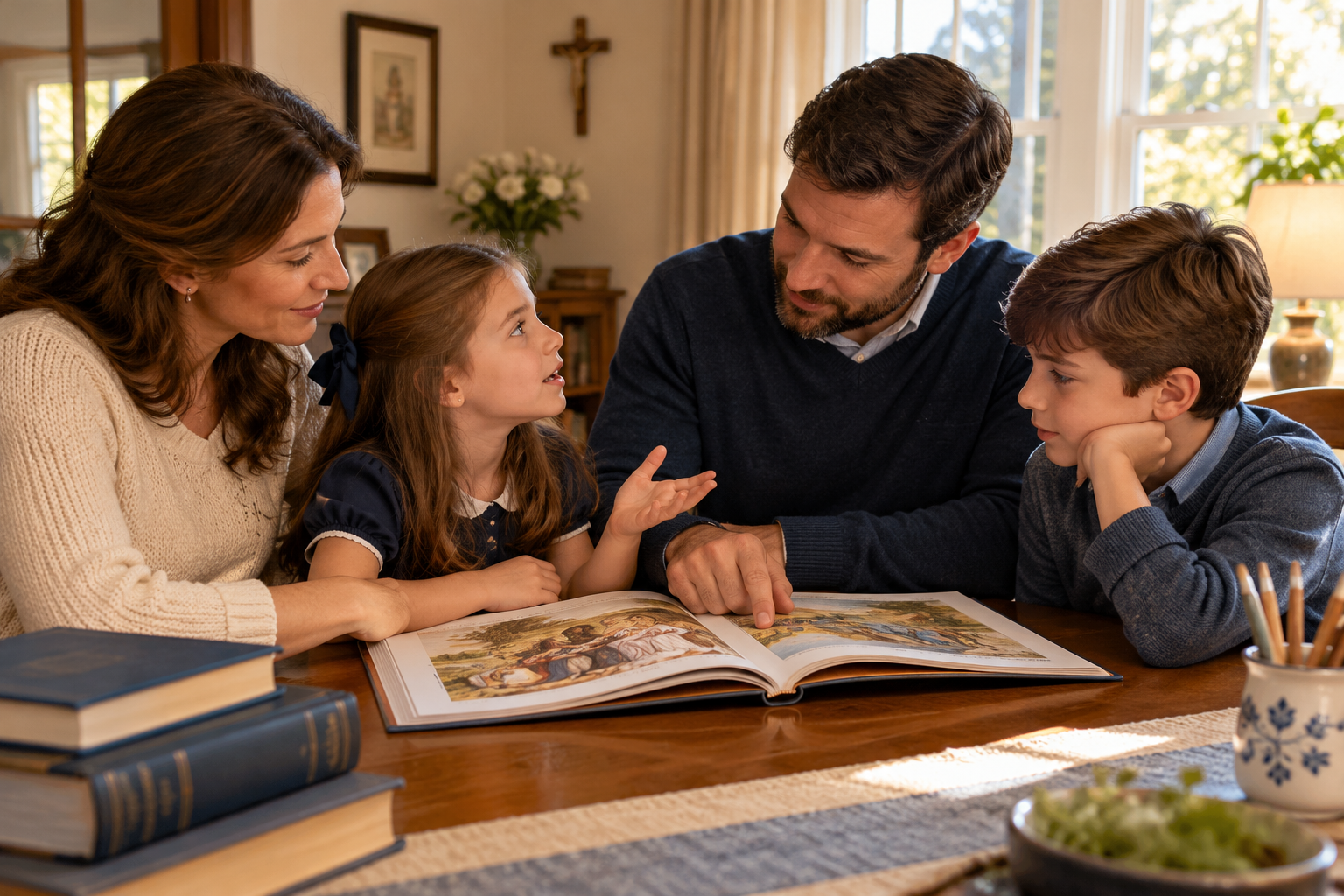
Parents teach through example as well as instruction. The Catechism connects education with the moral habits of the home and with formation in the faith.[2]
Practical examples include admitting a mistake, keeping an inconvenient promise, explaining a household rule, teaching a child to pray, and allowing questions to be asked respectfully. Each occasion can help the child connect words with conduct. No single practice exhausts the work of education.
Religious formation requires participation
Familiaris Consortio treats parents’ educational work as a responsibility arising from their relationship with their children and develops the Christian family’s role in handing on faith.[3]
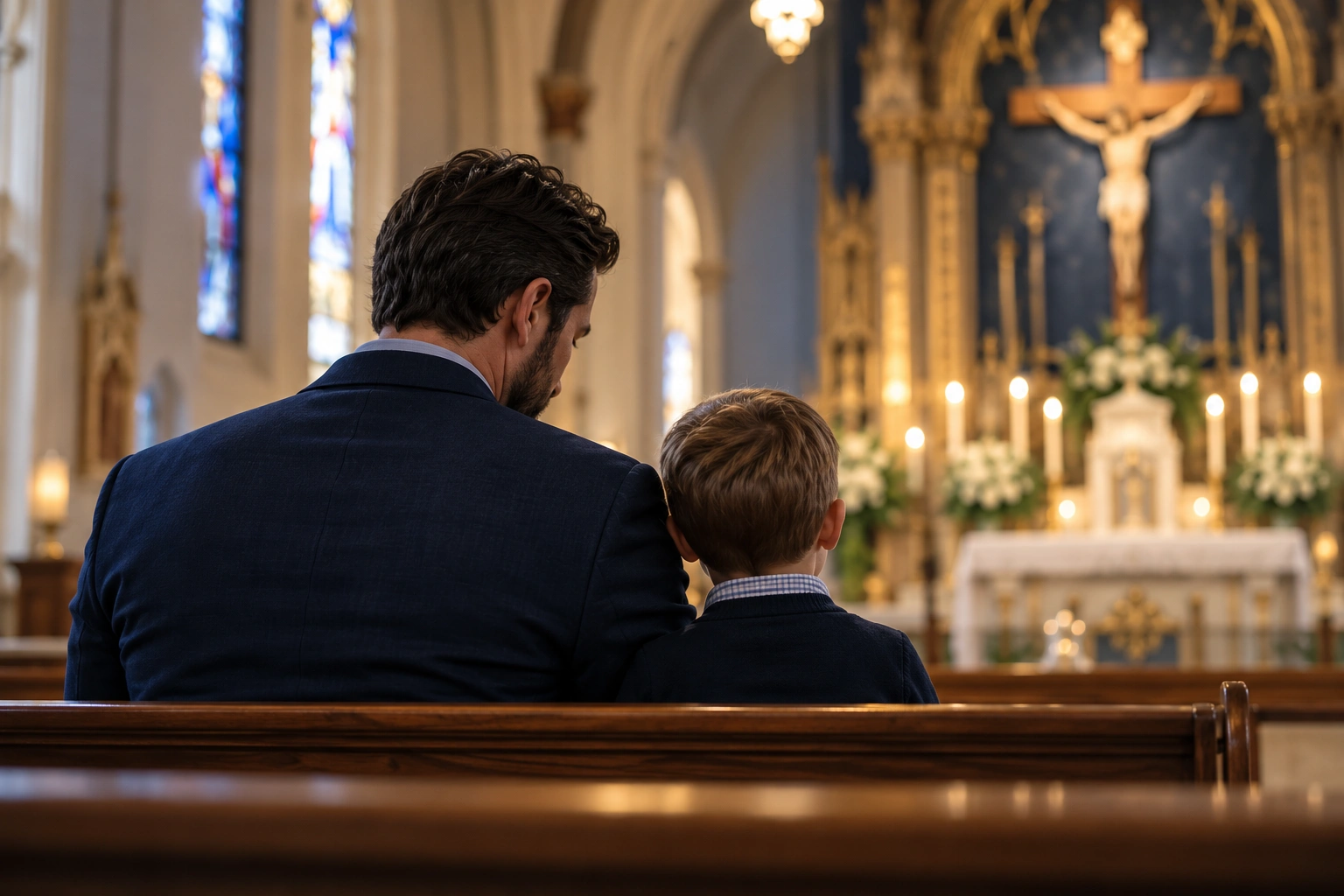
In practical terms, Catholic formation may involve Mass, sacramental preparation, conversation about belief, and the example of forgiveness and service. A parish program can assist that work, but attendance alone cannot perform the parents’ continuing personal role.
Schools and parishes assist parents
The Council’s declaration on education recognizes parents’ primary responsibility and the importance of the family, schools, the Church, and society in education.[4]
Assistance can be substantial and valuable. Parents may rely on teachers, catechists, and other qualified people while remaining engaged with what their children are learning. Respecting parental responsibility does not require denying expertise; it calls for cooperation directed toward the child’s formation.
Growing freedom changes the task
The Catechism recognizes that children gradually develop judgment and that adult children assume responsibility for their profession and state of life.[2]
Guidance appropriate for a young child will not always be appropriate for an adolescent or adult. Parents should explain reasons, listen carefully, and prepare children to act responsibly. Continuing affection should support maturity rather than prevent it.
When parents disagree
A disagreement about education should be described concretely. Is it about a school, a sacrament, a schedule, a teaching method, or the child’s expressed concern? Different problems require different responses.
TCMP considers prior shared commitments and established family practices important context. Their civil legal significance requires separate analysis. Canon 1136 does not by itself decide which parent receives a particular power under a Texas court order.
Connections with the other pillars
Pillar One asks what legal authority supports an order affecting parental education or religious formation and what protections apply. Pillar Three examines the child’s development and continuing care.
The Catholic foundation is a responsibility toward the child. TCMP’s practical contribution is to make that responsibility specific enough for readers to understand what a family decision may change.