
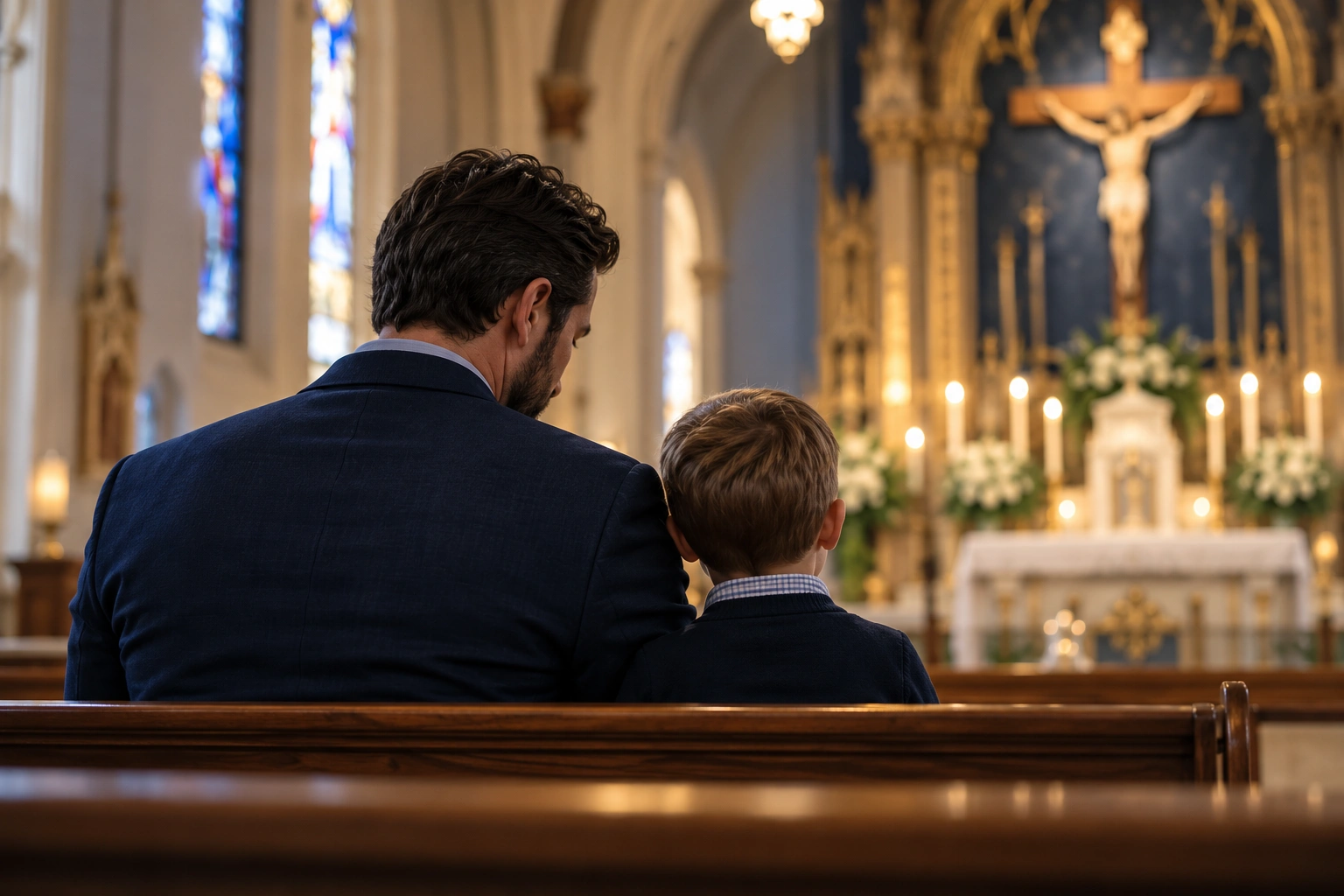


A little girl reaches for her father’s hand.
For him, it may be an ordinary moment: crossing a parking lot, walking into church, finding their way through a crowd. For her, that familiar hand offers a quiet assurance: Daddy is here. I am safe with him.
As she grows, the ways she reaches for him will change. A question from the back seat becomes a conversation at the kitchen table. Later, perhaps, it becomes a telephone call from miles away.
Through every season, a father has a precious message to give his daughter:
You are loved because you are my daughter. You never have to earn your place in my heart.
That assurance is among the most enduring gifts a father can offer.
A daughter will encounter plenty of judgments about her appearance, accomplishments, personality, and usefulness. She may feel pressure to be prettier, more agreeable, more successful, or more impressive. Home should be the place where she can set that burden down.
Her father’s love can tell her that her worth remains steady through a disappointing report card, an awkward adolescence, a failed ambition, or a difficult day. He can delight in her achievements while making certain she knows that his love was there before the achievement—and will remain afterward.
She belongs.
The ordinary moments that make love believable
Children learn what love means through repeated experience.
A father listens when his daughter tells a long story. He remembers something that matters to her. He puts down his phone. He keeps a promise, attends when he can, and explains honestly when he cannot.
He notices when her cheerful answer does not quite match her face.
These small acts give substance to the words “I love you.” Research on children’s development emphasizes the importance of attentive, responsive exchanges with caring adults. Everyday moments of connection help build the foundations for learning and development. [1]
A father does not need extraordinary wealth or a calendar full of impressive outings to begin. He needs to offer his attention faithfully.
Read the story. Take the walk. Ask the question—and stay long enough to hear the answer.
A love strong enough to guide
Unconditional love includes the courage to teach.
A father can correct his daughter without humiliating her. He can set a firm boundary while treating her with tenderness. He can say, “What you did was wrong, and we need to make it right,” while leaving no doubt that she remains deeply loved.
That distinction matters. A child needs guidance she can trust and a relationship in which mistakes can be faced honestly.
Fathers will make mistakes, too. Sometimes the most valuable words a daughter hears are:
“I was wrong. I am sorry.”
An apology followed by changed behavior gives her something substantial to remember. It shows her that responsibility belongs to adults as well as children, and that love calls us to repair the harm we cause.
She does not need a flawless father. She needs one who keeps accepting the responsibilities of fatherhood.
A promise that grows with her
A daughter’s adulthood changes the relationship. It does not cancel it.
The little girl who once needed help fastening her shoes may become a woman with a household, a vocation, and children of her own. Her father’s task becomes one of respectful support: listening without taking over, offering wisdom without demanding control, and welcoming her growth.
If she marries, he can honor her marriage while remaining a dependable father.
The hope is that she carries forward a lived understanding of faithful love: promises matter, respect is expected, and closeness can be safe. Her husband will have his own responsibility to earn and preserve her trust.
No childhood guarantees an easy marriage. No painful childhood makes a loving marriage impossible. Every daughter has a future that deserves hope.
A father can nevertheless give her a valuable beginning by making dependable love familiar.
Fatherhood as a Christian calling
For Catholic fathers, this daily faithfulness belongs to a vocation.
In Familiaris Consortio, Saint John Paul II calls fathers to generous responsibility for family life, including their children’s upbringing and the witness of their own Christian lives. Fatherhood asks for a continuing gift of oneself. [2]
That gift often takes an ordinary form: patient instruction, honest work, shared prayer, a meal together, forgiveness after an argument.
A daughter sees something of her father’s faith in how he treats her mother, how he speaks to people who cannot benefit him, and how he behaves when he is tired or disappointed. His example helps give meaning to the words he teaches.
When he prays for his daughter, he can also pray for the grace to become the father she needs: patient enough to listen, humble enough to change, and steadfast enough to keep loving through difficulty.
When being present is difficult
Some fathers face long periods away because of work, military service, illness, or circumstances beyond their control. Others struggle to preserve their relationship with their children through family separation or restrictions on contact.
Physical distance and a father’s willingness to remain involved are different realities.
Where opportunities exist, a father can keep reaching toward his daughter through calls, letters, remembered birthdays, shared prayers, and consistent efforts to participate in her life. The limitations may be painful. His faithful effort still has meaning.
For a daughter whose father has died, been absent, or caused harm, this message should carry tenderness. His absence or failure does not diminish her worth. She deserves dependable love and support, and there is reason to hope for healing and healthy relationships.
For a father who recognizes that he has fallen short, the next step is practical: acknowledge what happened, listen without demanding forgiveness, and begin keeping the promises you can keep. Trust takes time. Give your daughter that time.
A gift worth protecting
At the Texas Catholic Marriage Project, children’s security is central to how we understand family life. A child’s bond with a loving father deserves serious care because it is part of the life she is living now—and part of what she may carry into the years ahead.
Fathers, begin with the next ordinary opportunity.
Give her your attention. Speak gently. Follow through. Let her enjoy being your daughter without feeling responsible for your happiness.
Tell her you love her, and give those words a dependable shape in daily life.
Years from now, she may forget the present you bought or the advice you offered on a particular afternoon. What you hope she remembers is the assurance that accompanied her through childhood and remained as she grew:
“My father loved me. I had a place in his heart. I did not have to earn it.”
Additional resources
[2] Saint John Paul II, Familiaris Consortio, especially § 25: A Catholic reflection on men as husbands and fathers, their responsibilities, and their place in family life.
Pope Francis, Amoris Laetitia, especially §§ 175–177: Reflections on fatherhood and the importance of a father’s presence.
[1] Harvard Center on the Developing Child, Five Steps for Brain-Building Serve and Return: Practical ways to respond attentively to young children and strengthen everyday connection.
Your parish or diocesan family-life office: Ask about fatherhood groups, family prayer resources, and opportunities for fathers and daughters to spend meaningful time together.